아동학대 평가도구의 체계적 고찰
Abstract
Purpose
The aim of this study was to conduct a systematic review and to describe the characteristics of child abuse screening instruments.
Methods
Articles regarding the development of a child abuse screening instrument were investigated using the systematic review method. A literature search using the keywords “child and abuse or maltreatment and instrument or screening tool” in English, and “child,” “abuse,” and “instrument” in Korean, was conducted of material published in PubMed, PsycINFO, CINAHL, SCOPUS, ERIC, and RISS. Database and bibliographic searches, and quality appraisal using the Quality Assessment of Diagnostic Accuracy Studies tool that included systemic reviews, yielded 17 records.
Results
Key elementary child abuse screening instruments were developed for physical, psychiatric, affective and sexual and child neglect assessment. The instruments’ target populations were children at home and in institutions. The reviewed instruments had the advantage of diagnosing past, concurrent, and indirectly, potential child abuse.
Conclusion
The results of this study demonstrate that child abuse screening instruments are available for screening and for assessment of abused children in various circumstances. This review of child abuse screening instruments offers evidence for the acceptable use of optimal psychometric tools for child abuse assessment and provides guidelines for child health nursing practice.
Key words: 사정; 아동학대; 고찰
Key words: Assessment; Child abuse; Review
서 론
연구의 필요성
아동학대의 개념은 시대와 상황에 따라 다양하게 정의되어 왔으나 우리나라에서는 아동복지법 2조 3항에서 아동학대를 “보호자를 포함한 성인이 아동의 건강 또는 복지를 해치거나 정상적 발달을 저해할 수 있는 신체적·정신적·성적 폭력이나 가혹행위를 하는 것과 아동의 보호자가 아동을 유기하거나 방임하는 것을 말한다.”고 정의하여 신체적, 정신적, 성적폭력 및 유기와 방임을 아동학대의 범위에 포함시키고 있다[ 1]. 아동학대로 인해 사망하는 아동 수가 증가하고, 아동학대에 대한 사회적 관심이 증가됨에 따라, 우리나라에서도 ‘아동학대 범죄의 처벌 등에 관한 특례법’을 2014년 제정한 후, 2016년 재개정하여 신고의무자가 아동학대 사실을 인지한 즉시 신고를 하도록 신고기한을 명확히 하고, 아동학대 신고의무자를 24개 168만 명으로 규정했던 것을 성폭력피해자 통합지원센터, 육아종합 지원센터, 입양기관 종사자 3,000명을 신고의무자로 추가하고, 신고자에 대한 불이익 조치 시 처벌조항을 신설하는 등 강력범죄 신고자와 같은 수준으로 신고자에 대한 보호 조치를 강화하였다[ 2]. 이와 같은 사회적, 법제적 변화로 인해 아동학대 신고건수는 2010년 9,199건에서 2015년 19,214건, 이 중 아동학대 판정사례 건수는 2010년 4,633건에서 2015년 11,708건으로 2배 이상 증가하였다[ 3]. 그러나 아동학대 신고율이 증가하였음에도 아동학대 신고 의무자에 의한 신고율은 29.4%에 불과하고, 우리나라 피해아동 발견율은 2015년 기준 전체아동 수 천명당 1.3명으로 미국의 피해아동 발견율은 9.1명과 비교할 때 아직 아동학대 피해아동 발견율이 선진국에 비하여 극히 저조함을 알 수 있다[ 2]. 응급실 방문 소아 중의 아동학대 발견율 또한 국가마다 큰 차이를 보고 있는데, 영국의 경우 1.4-6.5%, 이탈리아의 경우 2%, 네덜란드의 경우 0.2%, 미국의 경우 10%까지 보고하고 있다[ 4- 9]. 우리나라 응급실 소아 손상 방문자 수에 비춰볼 때 0.1%로 가정하면 350명, 1%로 가정하면 연간 3,500여 명으로 추정할 수 있으므로 의료인의 신고 건수인 100건 미만의 수치와는 큰 차이를 보인다[ 9- 11]. 우리나라에서 아동학대 피해아동 발견율이 저조한 원인에 대하여는 대부분의 아동학대 사건이 가정 내에서 발생하며 피해아동이 의사표현 능력이 부족하거나 부모와의 유착관계로 인하여 신고하기 어렵고 일반인들이 부모의 학대를 훈육의 일종으로 판단하거나 아동학대를 쉽게 발견할 수 있는 교사나 의사 등 전문직역 신고의무자들의 신고율도 저조하다는 점 등으로 분석되었다. 아동학대 신고의무자 중에서도 의료인에 의한 신고는 전체 신고의무자 중 매년 약 1%(100건 이하)의 비율을 보이고 있으며 10여 년간 신고율의 변화는 보이지 않고 있다[ 2, 3]. 특히 피해학대 아동의 경우 외상이나 질병으로 의료기관을 방문하는 경우가 발생하기 때문에 의료인들의 아동학대에 대한 선별은 중요한 역할이나, 의료인조차도 아동학대를 선별하는 것은 매우 어려운 일이다. 또한 아동학대에 대해서는 실무자들이 주관적인 판단에 의존하거나 기관에 따라 다양한 기준을 가지고 적용함으로써 갈등과 문제가 초래되고 있었다. 실제현장에서 가장 갈등의 소지가 되고 있는 것이 학대의 범주를 설정하는 것이라고 할 때 아동학대 사정도구 등을 통한 아동학대를 판정할 수 있는 객관적인 기준의 제시는 실무자들이 아동학대 가해자와의 불필요한 갈등을 줄이고 신속하고 효과적인 개입을 시작할 수 있도록 하는데 유용할 것이다[ 12, 13]. 아동학대를 사정하는 목적은 아동 학대 문제를 조기 발견하여 그에 적합한 사회적 보호망 및 서비스를 제공하기 위함이다. 아동학대 여부를 객관적으로 평가하고 선별하기 위해서는 표준화된 사정도구의 사용은 매우 중요하다. 표준화된 사정도구는 평가 방식에 대한 구체적인 지침이 있고, 신뢰도와 타당도에 대한 통계적인 근거를 제시하고 있으며, 정상 범주에 대한 명확한 기준이 제시되어 있어 객관적이고 일관된 결과를 제시할 수 있다. 아동학대 사정도구는 현장조사에서 학대여부를 가릴 수 있는 아동학대 선별척도와 아동학대의 발생가능성을 예측하여 학대의 예방과 치료에 대한 자세한 정보를 얻을 수 있는 위험사정척도로 구분된다. 아동학대 선별척도는 현장에서 아동학대를 일반사례와 구분하고 현재 상황이 아동에게 안전한가, 격리를 요구하는 가를 판정하도록 기준을 제공하는 목적으로 제작된 척도이며, 위험사정척도는 아동학대를 사정함에 있어 가정과 아동의 위험성과, 학대유형, 위험요인 등을 정확히 사정하고 적절한 서비스를 제공하고자 하는 목적으로 제작된 척도이다[ 12]. 최근의 연구를 살펴보면 의료인의 아동학대 선별과정이나 도구에 관해 체계적으로 고찰한 연구는 있으나, 신체적 학대나 병원기반으로 제한하여 고찰하고 있다[ 15, 16]. 따라서 본 연구는 아동학대 선별척도 및 아동학대 위험사정척도를 모두 포함하여 아동학대 사정도구 개발문헌을 체계적으로 고찰하고, 아동학대 사정 도구의 특징 및 유용성을 탐색하고자 한다.
연구 목적
본 연구의 목적은 아동학대 사정도구 개발 문헌을 체계적으로 고찰하여 도구의 특징을 탐색하는 것이다. 연구의 구체적인 목적은 다음과 같다.
첫째, 고찰된 도구개발 연구의 질을 평가한다.
둘째, 고찰된 도구의 과정적, 도구적, 결과적 특징을 파악한다.
연구 방법
자료검색
아동학대 사정도구 개발논문에 대한 체계적 문헌고찰을 위한 검색과정은 다음과 같이 진행되었다. 검색결과의 민감도를 높이기 위해 사용한 국외 검색엔진의 검색조합은 advanced search에서 title과 abstract에서 abuse를 포함하는 와일드카드 검색어와 AND, OR의 불리언 연산자를 사용하여 다음과 같이[child] AND [abuse OR maltreatment] AND [instrument OR screening tool]로 검색하는 전략을 택하였다. 한국어 검색어로는 ‘아동’, ‘학대’ ‘측정도구’의 조합이었다. 검색결과 Pubmed에서 891편이 검색되었고, PsychInfo에서 16편, CINAHL에서 6편, SCOPUS에서 258편, ERIC에서 25편이 검색되었다. 국내 문헌의 고찰을 위해서 ‘아동학대 도구’의 검색어로 RISS를 통하여 검색한 문헌은 72편이었다. 국내외 검색논문은 총 1,268편이었다. 문헌의 연대는 1988년부터 2016년 5월 사이에 분포하였다.
문헌의 선정기준과 제외기준은 다음과 같다. 선정기준은 첫째, 검색 당시인 2016년 5월까지 발표된 영어와 한국어로 된 학술지 논문을 검색하였다. 한국어로 된 문헌을 포함시킨 이유는 선행 아동학대 체계적 고찰에 영어로 된 논문만을 포함되어 문헌검색의 비뚤림(bias)을 감소시키고자 함이었다. 둘째, 아동학대 사정도구 개발 방법론적 연구만을 포함하였다. 셋째, 아동학대의 전반적 영역인 신체, 정신, 심리, 성적 학대와, 방임 등을 포함하는 도구만을 포함하였다. 제외기준은 첫째, 학위논문, 발표문, 서간문, 단행본은 제외하였고, 둘째, 의학논문으로서 신체적 학대 진단만을 목적으로 하는 연구를 제외하였다. 이 제외기준으로 응급실에서 신체적 학대만을 선별하는 도구가 제외되었다. 셋째, 성적 학대와 정서, 심리적 학대 중 한 가지 학대 유형만을 진단하는 목적을 가진 연구를 제외하였다. 넷째, 아동학대의 결과로 생긴 외상 후 스트레스 증후군을 측정하는 도구를 제외하였다. 다섯째, 개발된 도구의 타당화 연구를 제외하였다. 이 기준으로 개발된 연구의 국가별 수정판과 확인적 요인분석 및 대상 연령을 달리한 연구가 제외되었다. 전체 검색한 1,268편의 논문의 초록을 모두 고찰하여, 이 중 아동학대 평가 도구개발 논문이 아닌 1,203개의 실험연구, 서술적 조사연구, 질적 연구 등을 제외하여 65편의 도구개발 관련논문을 추출하였다. 도출된 논문의 본문을 모두 고찰하고 참고문헌으로부터 수기검색으로 9편의 논문을 추가하여 74편의 논문을 추출하였다. 이 중 38편이 동일한 논문으로 중복되는 것은 정리하여 36편의 논문을 추출하였다. 도출된 문헌은 도구개발연구의 질 평가 도구인 QUality Assessment of studies of Diagnostic Accuracy included Systemic reviews (QUADAS)로 점검하여[ 17], 영문논문 11편과 국문논문 6편을 최종 선정하였다( Figure 1).
문헌의 질 평가
연구자들은 1차로 추출된 1,268편의 논문 초록을 고찰하고 아동학대 평가 도구개발 논문을 함께 추출하였다. 2차로 추출된 65편의 본문을 고찰하는 과정에서 선정기준과 제외기준에 대한 토론으로 확인 작업을 거쳤으며, 수기 검색한 논문의 선정을 의논하였고, 중복논문을 대조하였다. 3차로 추출된 36편의 논문에 대한 질 평가를 논의하며 시행하였다. QUADAS는 체계적 문헌고찰 연구에서 진단적 도구개발논문의 질 평가를 위해 개발된 도구이다. 짧고 간편하며 여러 가지 배경의 방법론적 연구에 두루 사용할 수 있는 장점이 있다. QUADAS는 의학 분야에서 진단적 검사의 질을 평가하기 위한 목적으로 개발되었으며 현재 수정된 QUADAS와 QUADAS-2까지 개발되어 있으며, 알고리즘 형식으로 되어 있는 QUADAS-2보다 체크리스트 형식으로 되어 있어 사용의 간편성과 내용적으로 간호학에 적합한 QUADAS를 사용하여 고찰한 연구의 질 평가를 실시하였다. 연구에서 개발한 도구는 ‘본도구(index test)’라 명명하였고, 준거 타당도를 보는 도구는 ‘참조표준(reference standard)’라 명명하였다[ 18]. QUADAS는 체크리스트 형식으로 되어 있으며 문항 수는 14개로 ‘그렇다(yes)’, ‘아니다(no)’, ‘불분명하다(unclear)’의 세 가지로 체크하게 되어 있다. 14개의 문항은 “대표성 있는 표본으로 만들어진 도구인가?”, “표집의 선정기준이 명확한가?”, “참조표준이 있는가?”, “참조표준과 본 도구의 시간차가 적은가?”,“참조표준에 의해 검증받았는가?”, “동일한 참조표준으로 검증 받았는가?”, “본 도구는 참조표준과 독립적인 구성을 가지고 있는가?”, “재현할 수 있을 만큼 세부적인 방법을 제시하는가?”, “반복해 사용할 수 있을 정도로 세부적인 내용을 제시하는가?”, “개발된 본 도구를 해석할 수 있는가?”, “참조표준으로 측정한 결과를 해석할 수 있는가?”, “실무에 실행할 때와 같은 임상적 자료를 나타내는가?”, “중개효과를 가진 측정결과가 보고되었는가?”, “탈락이 설명되었는가?”의 내용으로 되어 있으며 체크한 점수의 범위는 0-14점이다. 연구자들은 추출한 문헌들의 질 평가를 하였으며 이에 따른 점수를 확인하였다[ 17] ( Table 1).
문헌추출
질 평가를 마치고 4차로 추출된 17편의 논문에 대하여 각 논문마다 사례 보고(case report)를 표준화하여 작성하였다. 사례보고의 항목은 연구의 일반적 사항, 대상자 관련 사항, 방법적 특성, 도구적 특성, 결과적 특성으로 크게 나누어 구성하였다. 연구의 일반적 사항으로 고유번호(study ID), 제1저자(first author), 출판연도(year of publication), 도구명과 약어(name of instrument and abbreviation), 나라(country)를 정리하였다. 연구의 대상자 관련 사항으로 논문의 종류(type of study), 연구기간(study period), 연구 장소(study setting), 연구목적(study aim), 대상자의 수(sample size), 대상자 연령(sample age), 대상자 성별 분포(gender distribution), 대상자 선정기준(case inclusion criteria), 대상자 제외기준(case exclusion criteria)을 정리하였다. 연구의 과정적 특징관련 사항으로 타당도(validity), 구성타당도 검증방법(construct validation method), 신뢰도(reliability), 확인적 요인분석 유무(confirmatory factor analysis), 절단점 제시유무(cut off, instrument user)를 정리하였다. 연구의 도구적 특징 사항으로 목표 대상자(target population), 척도(scale), 문항 수(item), 범위(range), 하위범주(subcategory), 도구기준(index test), 참조표준(reference standard)을 정리하였다. 도구의 결과적 특징 사항으로 유용성(usefulness), 장점(advantage), 단점(disadvantage), 제언(suggestion)을 정리하였다. 사례보고는 체크리스트 형식으로 정리 틀을 만들어 17편 논문을 연구자가 독립적으로 각각 작성하여 한 편씩 연구자 간에 논의를 거쳐 확정하였다. 두 명의 연구자가 합의가 되지 않는 경우 제 삼의 연구자에게 의견을 물어 합의 하는 방식으로 진행하였다.
연구 결과
아동학대 사정도구 개발의 질 평가 결과
추출한 문헌 17편의 QUADAS 도구개발 문헌의 질 평가 결과 14점 만점 중에 3점에서 11점의 범위를 나타내었다. 3점으로 평가된 문헌은 Milner[ 19], Lee[ 20], Jang[ 21]의 3편이었으며, 11점으로 평가된 문헌은 Flower[ 22]과 Han[ 23]이었다. 나머지 문헌은 5점인 문헌 2편, 6점인 문헌 3편, 7점인 문헌 2편, 8점인 문헌이 2편, 9점인 문헌이 1편, 10점인 문헌이 2편이었다. QUADAS 각 항목별로는 참조표준과의 독립적인 구성은 16편의 문헌이 충족하였고, 표본의 대표성과 대상자 선정기준은 14편의 문헌에서 충족하였다. 참조표준과 본 도구의 적은 시간차를 충족한 문헌은 11편이었다. 실무에 실행할 때와 같은 임상적 자료를 나타내는가의 항목은 불분명(unclear)하게 나타난 문헌이 5편으로 불분명이 가장 많은 항목이었다. 임상적 중개효과를 가진 측정결과가 보고는 Zoloto[ 24]의 연구만이 충족하였다( Table 2).
아동학대 사정도구 개발의 과정적 특징
도구개발의 과정적 특성은 도구개발의 방법론적 특징(methodological characteristics)으로서 도구를 개발하기 위한 절차적 특성인 개발 장소, 표적 모집단과 유사한 표집을 하였는지를 확인하기 위한 대상자의 기술, 표집 장소가 대표성을 띄고 있는지를 포함하는 내용이다. 국가별로는 한국 도구가 6편, 미국 도구가 6편, 네덜란드 도구가 3편, 콜롬비아, 인도, 러시아, 아이스랜드, 이집트, 레바논, 말레이시아, 콩고의 대상자를 표집한 UNICEF 연구가 2편이었다. 도구는 17편 모두 고유의 약어 도구명을 가지고 있었다. 표적 대상자는 5세 미만의 영유아기가 1편, 5-6세의 학령전기가 1편, 7세 미만이 1편, 초등학생이 1편, 13세 미만이 1편, 7-13세 1편, 7-15세 1편, 11-17세 1편, 초중등 학생이 1편, 18세 미만이 2편, 연령제한 없는 아동이 1편, 18세 이전에 아동학대를 경험한 성인이 3편, 아동학대 가해자 가능성이 있는 성인이 2편으로 나타났다. 도구 사용자는 일반인이 7편, 연구자가 1편, 아동학대 신고의무자를 포함한 아동보호자가 5편, 간호사와 의료인이 3편, 불분명이 1편이었다. 표본의 수는 Andrest 등[ 25]이 139명으로 가장 적었고, Louwers[ 9]가 38,136명으로 가장 많았다. 표집 장소는 병원응급실 4편, 학대치료 센터 3편, 학대아동 보호기관 2편, 아동학대 상담센터 2편, 대학교 1편, 초등학교 1편, 유치원 1편, 전자메일 1편, 불분명 1편으로 병원 응급실과 아동학대 전문기관이 많았다. 대상자의 성별 분포는 아동 남녀 비율이 20% 이상 차이나지 않았고 고르게 분포하였고, 성인 남녀 비율은 1.3배에서 2.5배 이상으로 남성이 여성에 비해 많았다.
대상자의 선정 기준은 보호기관 아동, 범죄율이 높은 지역 아동, 약물중독 부모, 아동학대 예방프로그램 등록부모, 정신과 치료 부모, 경제적 지위가 중하인 가정의 아동, 의료보호 의무자 등으로 아동 학대 고위험 군이 많았으며, 불분명한 문헌이 5편이었다. 대상자의 배제 기준은 동의하지 않은 대상자, 손상확인이 불가능한 대상자, 아동학대 보호 중재자가 있었으며, 불분명한 문헌이 10편이었다. 표집 시기는 2002년에서 2010년 사이였으며, 불분명한 문헌이 9편이었다.
아동학대 사정도구 개발의 도구적 특징
아동학대 도구의 도구적 특징은 아동학대 선별척도가 5편, 위험사정척도가 12편이었다. 도구 항목의 총 수는 6개에서 85개였다. 도구의 척도는 Likert 척도가 12편이었고, 이분척도(binary scale)가 4편이었다. 도구의 하위범주는 언어폭력, 신체폭력, 간접폭력, 직접폭력, 방임, 성학대, 심리폭력, 적대적 양육, 제한적 양육, 나태한 양육, 정서문제, 기초양육, 교육방임, 정서방임, 신체방임, 부모 간 폭력노출 등이 있었다.
도구의 타당도 검증은 요인분석에 의한 구성타당도, 문항 총점 상관분석, 내용타당도, 수렴타당도, 규준지향타당도, 집단비교법, 교차 타당도, 대비 타당도 등이 있었다. 구성타당도는 주로 탐색적 요인분석의 누적분산으로 도구의 설명력을 나타내었다. 문항 총점 상관분석은 Pearson’s correlation coefficient로 .20에서 .63의 범위를 나타내었다. 수렴타당도와 규준지향 타당도는 Pearson’s correlation coefficient로 .25에서 .80으로 나타났다. 집단비교법, 교차타당도, 대비 타당도는 양측 검정 유의수준 p값이 .002에서 .070로 나타났으며, 고위험 판정군이 비판정군에 비해 우도비(Odd Ratio)가 2.8배에서 189.8배까지 나타났다.
도구의 신뢰도 검증은 내적일관성 신뢰도를 13편의 문헌에서 제시하였으며, 검사-재검사 신뢰도는 4편에서 제시하였다. 카파계수를 검증한 문헌은 2편이었으며, 신뢰도 검증을 수행하지 않은 문헌은 3편이었다. 신뢰도의 범위는 Cronbach’s alpha 값이 .72에서 .98의 범위를 가지고 있었으며, 검사-재검사 신뢰도의 Cronbach’s alpha 값은 .54에서 .86의 범위를 가지고 있었고, Kappa’s coefficient는 .50에서 .83의 범위를 가지고 있었다.
도구의 민감도와 특이도를 확인한 문헌은 Ondersma[ 26]와 Louwers[ 9] 뿐이었다. 도구 점수의 절단점(Cut Point)를 제시한 문헌은 Moon[ 13], Louwers[ 9], Park[ 27]의 문헌이었고, 표준오차를 제시한 문헌은 없었다. 확인적 요인분석은 4편의 문헌에서 제시하였으며, Fitness Index가 모두 .90 이상으로 양호하였다. 개발도구의 목적은 아동학대 선별 및 잠재적 아동학대 확인, 아동학대 유병률 조사, 현재의 아동학대 사정, 과거의 아동학대 경험 사정, 아동학대 부모 선별, 아동학대부모 사정도구였다. 가장 많이 사용된 참조표준 도구는 Bernstein[ 28]의 Child Trauma Questionnaire (CTQ)로 3편에서 채택하였다( Table 3).
아동학대 사정도구 개발의 결과적 특징
고찰한 도구들의 유용성은 가정, 학교, 시설, 병원에서 아동의 현재와 과거의 잠재적 학대를 선별하거나 사정하는 것과 아동학대 가해자를 선별하거나 사정하는 데에 있었다. 도구들의 장점은 직접 또는 간접적인 아동학대를 확인할 수 있다는 점, 다양한 범주의 아동학대를 측정할 수 있다는 점, 잠재적 학대를 선별할 수 있다는 점, 한국에 적용 가능한 아동학대 도구라는 점, 다양한 나라에서 사용할 수 있는 다문화적 도구라는 점, 성인학대와 상관관계가 높은 도구라는 점, 인터뷰 절차를 통해 도출된 도구라는 점, 적은 문항으로 측정할 수 있다는 점, 응급실에서 빠르게 판단할 수 있다는 점이 있었다. 도구들의 단점은 적은 표본수로 인한 일반화의 제한점, 범죄율이 높은 지역과 아동보호 시설에서 표집한 대상자의 특수성에 의한 제한점, 아동학대 예측의 어려움, 윤리적 문제, 문항을 제시하지 않음, 예측불가능성, 학대 확인의 시간적 비경제성, 외적타당도의 비독립성, 후향적 질문이라는 점이 있었다. 고찰한 문헌의 제언으로는 타 도구와 비교, 확인적 요인분석, 구성타당도 확인, 검사-재검사 신뢰도 확인, 절단점 제시, 표본수의 확대, 타 언어로 번역, 타 문화와 비교, 간호사의 교육, 의학 분야에의 적용, 연구전략 다양화가 있었다( Table 4).
논 의
학대아동에 대한 국가적 보호서비스는 국가마다 다른 특성을 보이며 이는 아동학대에 대한 사회적, 문화적 인식에 따라 차이를 보인다. 아직 아동학대에 대한 신고율이 높지 않은 국가들에서는 아동학대 사정에 대한 개발 및 사용에 대해 중요성이 강조되고 있으며[ 11, 12, 16], 이러한 국가들에서 아동학대 사정도구는 의료인들의 인식을 이는 역할을 할 수 있으며, 병원 기반 아동 보호팀의 구성은 의료인의 신고율을 향상시키는데 도움을 줄 수 있다[ 12, 14]. 이에 본 연구는 체계적 고찰을 통해 국내외에서 개발된 아동학대 선별척도 및 아동학대 위험사정척도을 소개하고, 각 도구의 특성 및 유용성을 밝히는데 기초자료를 제공하였다는 의의가 있다. 본 연구에서 추출한 도구개발 문헌의 질 평가를 위해 QUADAS (QUality Assessment of studies of Diagnostic Accuracy included Systemic reviews)를 적용하여 평가하였는데, 본 연구에서 QUADAS를 통해 질 평가 점수가 가장 높게 도출된 연구는 Flower[ 22]과 Han[ 23]의 연구였다. Flower의 연구에서 개발한 KID-SAVE 도구는 직접적, 간접적 폭력과 신체적, 언어적 학대를 모두 포함하여 아동학대를 사정할 수 있도록 개발되었으며, 연구에서 신뢰도와 타당도를 다각도로 측정하여 구체적으로 제시하고 있으며, 아동학대 유병률을 조사하기에 적합하게 개발되었다. Han의 연구에서 개발된 Physical Abuse Assessment Scale for Children (PASC)는 초·중등학교에서 학령기 아동을 대상으로 아동학대를 사정할 수 있도록 개발되었는데, 연구에서 내적일관성 신뢰도가 .97로 매우 높고, 이분척도로 간단히 자가 보고할 수 있는 37문항의 척도로 절단점을 제시하고 있었다. 그 외에 고찰된 아동학대 사정개발 연구들은 표준화와 관련된 경험적인 자료들(내적 일치도와 타당도)을 제시하는데 있어 Flower[ 22]과 Han[ 23]의 연구보다 상대적으로 부족하였는데, QUADAS를 통해 질 평가 점수가 높게 도출된 연구들은 신규척도의 내용타당도, 내적 일치도, 기준관련타당도 동시 타당도 등을 구체적으로 보여주고 있었고, 절단점을 제시하고 있었다. 또한 QUADAS 평가 항목 중 임상적 중개효과를 가진 측정결과를 보고한 연구는 Zoloto[ 24]의 연구만이 충족하고 있었는데, 추후 본 연구에서 고찰된 도구를 적용하여 도구의 임상적 중개효과를 확인하는 것이 요구된다. 고찰된 문헌의 아동학대 사정도구 개발의 과정적 특징을 살펴보면 다음과 같다. 아동학대 선별 및 잠재적 아동학대 확인척도는 4개였으며, 현재의 아동학대 위험사정 척도는 6개, 과거의 아동학대 경험 사정 척도는 2개로 나타났다. 아동학대 선별척도는 응급실에서 주로 간호사에 의한 일차적으로 학대의심 아동을 선별하는 목적으로 만들어졌다. 신속하게 판단하기 위해 도구 문항은 6-9개로 적고 하위범주도 존재하지 않는다. 또한 절단점이 제시되어 있어 학대 의심아동은 전문적 사정을 위해 의뢰될 수 있도록 판단기준이 있다. 아동학대 선별척도는 의료인들이 아동학대의 인식을 높이는 중요한 역할을 하는데, 본 연구에서 고찰한 아동학대 선별도구 중 Louwers 등[ 9]이 개발한 Escape 도구는 38,136명의 광범위한 표본으로 연구되었으며 절단점과 민감도, 특이도를 제시하였고 양성예측도가 높아 선별도가 높았다. Escape 아동학대 선별도구는 응급실에서 간호사가 선별도구 6가지 항목 중 하나라도 이상소견이 있으면 의사에게 보고하고 의사는 그 환아의 병력, 신체검진 등을 통해 아동학대의 위험성을 판단하여 아동의 안전이 위험하다고 판단되는 경우, 병원 내 아동학대평가팀에 의뢰하고, 아동학대평가팀은 의뢰된 모든 사례를 검사하고 필요한 행동을 취하고 있었다. Louwers 등[ 9]은 병원 내에서 아동학대 선별의 장벽이 되는 요인으로 병원 차원에서의 지원, 아동 학대 전문가 유무, 응급실 의료진의 집중적인 교육, 재정적인 지원과 함께 병원 내 아동학대평가팀의 필요성을 역설하였는데, 국내 연구에서도 의료인은 아동학대 신고의무자이지만, 이로 인해 동시에 보호자와 대립적인 입장에 서게 되므로 이런 단점을 보완하고 의료인들이 아동학대 의심사례 발생 시 언제든지 부담을 가지지 않고 보고할 수 있도록 병원 내 아동학대평가팀을 통해 신고할 수 있도록 하는 제도적 보완의 필요성을 제기하고 있다[ 12]. 아동학대 선별도구의 사용현황을 살펴보면 주로 병원기반으로 응급실에서 주로 사용되고 있는데 국외에서는 미국의 소아과학회와 네덜란드 의학회의 아동학대지침에 따라 적극적으로 사용되고 있었으며, 국내에서는 Park 등의 연구[ 27]가 국내에서는 최초로 개발된 병원기반 아동학대 선별척도였다. 본 연구에서 아동학대 위험사정척도는 주로 아동학대 신고의무자가 사용할 수 있는 도구가 6편으로 아동보호시설이나 상담실, 가정에서 사용할 수 있는 도구가 많았다. 위험사정척도는 아동과 양육자를 고려하여 학대가정에 관한 보다 다각적 정보를 이끌어 낼 수 있도록 구성되어야 한다. 위험사정척도는 평가 항목수가 22-85개로 아동학대 선별척도에 비해 많고, 총 점수의 범위도 0점에서 435점으로 다양하였다. 도구의 하위범주는 언어폭력, 신체폭력, 간접폭력, 직접폭력, 방임, 성 학대, 심리폭력, 적대적 양육, 제한적 양육, 나태한 양육, 정서문제, 기초양육, 교육방임 등으로 아동학대의 다양한 범주를 포괄하고 있었다. 외국에서 위험사정척도 사용현황을 살펴보면 미국에서는 아동학대 관련 위험요인을 중심으로 한 아동학대 위험사정척도를 사용하고 있었으며, 일본에서는 위험사정척도로 아동, 부모, 친자관계, 가정, 생활환경 또한 원조기관과의 관계에서 어떤 위험이 있으며 어떤 것이 필요한지를 파악하는데 사용하고 있었다[ 14]. 본 연구에서 아동학대 부모 선별 1편, 아동학대부모 사정도구는 2편이었다. 아동학대 가해자를 선별하는 도구는 학대아동의 원인 제공자를 찾아 아동학대를 예방하거나 조기 발견할 수 있는 유용성을 가지고 있다. 본 연구에서 고찰된 아동학대 선별척도로 아동학대 위험이 있는 아동과 양육자를 선별하고, 보다 심층적인 사정과 사정결과에 따른 지속적 사정을 할 수 있는 아동학대 위험사정 척도를 적용하여 가족원, 가족, 지역사회 등의 환경에서 아동을 보호할 수 있는 요인과 위험한 요인들을 심도 있게 파악할 수 있게 된다면, 아동학대의 가능성 및 위험도를 조기에 파악하여 신속히 대응함으로써 아동보호에 효율성을 기할 수 있을 것이다. 현재 아동학대 부모 사정 척도로 Runyan 등[ 29]의 Child Abuse Screening Tool Parent’s version (ICAST-P) 도구는 0-18세의 연령을 망라하며 아동학대의 거의 모든 범주인 신체, 심리, 방임, 성, 행동 측정을 포함하고 있다. 또한 학교, 시설, 가정에서 사용할 수 있도록 개발되었고 6개 나라의 7개 언어로 번역되어 사용하여 다문화적 검증을 받았으므로 과정적으로 유용한 도구이다. 본 연구에서 고찰한 도구의 아동 표적 대상자는 5세 미만의 영유아기가 1개, 5-6세의 학령전기가 1개, 7세 미만이 1개로 낮은 연령의 아동학대를 측정하는 도구가 적었다. 아동을 연령별로 구분하여 보았을 때 중·고등학생을 제외한 0세부터 초등학생까지의 학령기 아동학대비율이 가장 높게 나타나 한국의 경우 67.6%, 일본이 77.9%로 높게 나타났다. 주로 아동학대가 의사표현이 어려운 영유아를 대상으로 한 빈도를 볼 때, 아동학대에 취약한 영유아기 아동만을 측정하는 도구가 희소하였으므로, 영유아기와 학령전기 아동을 대상으로 한 아동학대 평가 도구 개발이 요구된다.
고찰된 문헌의 도구적 특성에서는 대부분 타당도와 신뢰도의 검증이 명확히 제시되어 있었다. 타당도로는 주로 요인분석을 통한 구성타당도, 내용타당도, 문항 총점 상관관계로 타당화하였다. 신뢰도는 주로 내적일관성 신뢰도를 Cronbach의 a값을 구하였다. 검사-재검사 신뢰도를 구한 도구는 4개로 적어 검사-재검사 신뢰도를 제언하는 문헌들이 많았다. 민감도와 특이도, 절단점, 표준오차를 제시한 문헌이 극히 소수이 확인적 요인분석도 4편으로 적었으므로 준거타당도와 확인적 요인분석을 통한 구성타당도의 보강, 검사-재검사 신뢰도 분석을 통한 신뢰도의 보강, 민감도, 특이도, 절단점 제시로 선별도를 향상시키는 것이 미래의 도구개발에서 참고해야 할 것이다.
고찰된 문헌의 결과적 특성에서는 도구들이 한국적 상황에서 사용하기에 적합하도록 범용할 수 있도록 다문화적으로 검증된 도구들이 있었다. 또한 다양한 연령, 가정, 시설, 병원의 표적 집단, 의료인과 일반인 사용자, 아동과 부모 설문조사 등으로 구분되어, 평가하고자 하는 목적에 맞게 사용할 수 있었다.
본 연구에서 아동학대 사정도구 개발논문의 고찰을 통한 간호교육의 시사점은 다음과 같다. 본 연구를 토대로 현재 개발되어 있는 아동학대 사정도구의 종류 및 특성에 대해 분석함으로써, 국내외에서 아동학대를 사정하는 도구개발 현황 및 도구의 종류, 관련 연구에 대한 정보를 제시하였다. 이러한 연구결과를 통해 아동학대 신고의무자가 본인의 직무와 평가 목적 등을 고려하여 적합한 아동학대 평가 도구를 선택하여 활용함으로써 아동학대의 가능성 및 위험도를 조기에 파악하고 신속히 대응함으로써 아동학대 예방에 기여할 수 있을 것이다.
결 론
본 연구는 아동학대 사정을 위한 도구개발 문헌의 질을 평가하고 도구개발의 특징을 파악하기 위해 체계적 고찰을 시행하였다. 연구결과 17개의 논문이 최종적으로 분석되었으며, 아동학대 평가도구의 과정적 특징은 아동학대 선별 및 잠재적 아동학대 확인 4편, 아동학대 유병율 조사 2편, 현재의 아동학대 사정 6편, 과거의 아동학대 경험 사정 2편, 아동학대 부모 선별 1편, 아동학대부모 사정도구 2편이었다. 고찰한 도구의 표적 대상자는 5세 미만의 영유아기가 1개, 5-6세의 학령전기가 1개, 7세 미만이 1개로 낮은 연령의 아동학대를 측정하는 도구가 적었다. 아동학대 평가도구의 도구적 특징은 본 연구에서 고찰한 도구들은 도구개발의 절차적 특성에서 대부분 타당도와 신뢰도의 검증이 명확히 제시되어 있었다. 타당도로는 주로 요인분석을 통한 구성타당도, 내용타당도, 문항 총점 상관관계로 검증하였다. 그러나 확인적 요인분석, 절단점, 민감도, 특이도의 제시는 미흡하여 차기 도구 개발에 보강해야 할 것이다. 아동학대 평가도구의 결과적 특징은 범용할 수 있도록 다문화적으로 검증된 도구들이 있어 한국적 상황에서 사용하기에 적합한 도구들이 발견되었고 임상, 가정, 지역사회 등 다양한 배경에 있는 아동, 성인에게 조사 할 수 있는 도구 개발이 필요하였다.
References
1. Moon SH, Kim JY, Hyun YN, Kim HY. Understanding Child Abuse. Gyeonggi-do: Yangseowon; 2010. p. 11-16.
2. Koh KS, Ban JS. Promoting law reform to build early detection systems for child abuse. Lawyers Association Journal. 2016;65(6):312-320.
4. Gilbert R, Widom CS, Browne K, Fergusson D, Webb E, Janson S, et al. Burden and consequences of child maltreatment in high-income countries. Lancet. 2009;373(9657):68-81.   6. Gonzalez-Izquierdo A, Woodman J, Copley L, van der Meulen J, Brandon M, Hodes D, et al. Variation in recording of child maltreatment in administrative records of hospital admissions for injury in England, 1997-2009. Arch Dis Child. 2010;95(11):918-925. 7. Benger JR, Pearce V Simple intervention to improve detection of child abuse in emergency departments. BMJ. 2002. 324(7340):780. 8. Chang DC, Knight V, Ziegfeld S, Haider A, Warfield D, Paidas C. The tip of the iceberg for child abuse: the roles of the pediatric trauma service and its registry. The Journal of Trauma. 2004;57(6):1189-1198. 9. Louwers EC, Korfage IJ, Affourtit MJ, Ruige M, Van den Elzen AP, de Koning HJ, et al. Accuracy of a instrument to identify potential child abuse in departments. Child Abuse and Neglect. 2014;38(7):1275-1281. http://dx.doi.org/10.1016/j.chiabu.2013.11.005
10. Ministry of Health & Welfare, National Child Protection Agency. 2014 National Child abuse Report. Seoul: Ministry of Health & Welfare, National Child Protection Agency; 2015. July. Report No.:11-135200025-10.
12. Jung JH, Kwak YH. Review of the screening tool for child abuse by health care provider. Pediatric Emergency Medicine Journal. 2015;2(1):1-7.  13. Moon SH, Jung YS. Development of the child abuse investment scale. The Social Welfare Research Review. 2003;12:43-76.
14. Kim SK. Scale of child abuse assessment study. Korea Institute for Health and Social Affairs; 2003. p. 1-44.
15. Woodman J, Lecky F, Hodes D, Pitt M, Taylor B, Gilbert R. Screening injured children for physical abuse or neglect in emergency departments: a systematic review. Child Care Health Dev. 2010;36:153-64. http://dx.doi.org/10.1111/j.1365-2214.2009.01025.x
16. Louwers EC, Affourtit MJ, Moll HA, de Koning HJ, Korfage IJ. Screening for child abuse at emergency departments: a systematic review. Archives of Disease in Childhood. 2010;95:214-218. http://dx.doi.org/10.1136/adc.2008.151654
19. Milner JS, Gold RG, Wimberley RC. Prediction and explanation of child abuse: cross-validation of the child abuse potential inventory. Journal of Consulting and Clinical Psychology. 1986;54(6):865-866. 20. Lee SH. Validation of a scale for screening the abuse in early childhood. Child studies. 1993;2:69-77.
21. Jang HJ, Lee JY. The development of a child abuse assessment scale. Journal of Korean Council for Children & Rights. 1999;3(1):77-96.
22. Flowers AL, Hastings TL, Kelley ML. Development of a screening instrument for exposure to violence in children: The KID-SAVE. Journal of Psychopathology & Behavioral Assessment. 2000;22(1):91-104. http://dx.doi.org/10.1023/A:1007580616096
23. Han IY, Park MS, Park HW, Yoo SK, Lee YW. Development of a physical abuse assessment scale for children. Journal of the Korean Society of Child Welfare. 2006;21:7-27.
24. Zolotor AJ, Runyan DK, Dunne MP, Jain D, Peturs HR, Ramirez C, et al. ISPCAN Child Abuse Screening Tool Children’s Version (ICASTC): Instrument development and multi-national pilot testing. Child Abuse & Neglect. 2009;33(11):833-841. http://dx.doi.org/10.1016/j.chiabu.2009.09.004
25. Anderst J, Dowd MD, Schnitzer P, Tryon T. Preliminary development of a rapid assessment of supervision scale for young children. Pediatrics. 2012;129(6):1517-1524. http://dx.doi.org/10.1542/peds.2100-2880
26. Ondersma SJ, Chaffin MJ, Mullins SM, LeBreton JM. A brief form of the child abuse potential inventory: Development and validation. Journal of Clinical Child & Adolescent Psychology. 2005;34(2):301-311. http://dx.doi.org/10.1207/s15374424jccp3402_9
27. Park JD, Gwak YH, Kim EJ, Kim JS, Ruw JM, Bae JK, et al.. Development of child and elder abuse screening tool for healthcare provider. Seoul: Korean Society of Pediatric Emegency; 2014 December.
28. Wenzel K, et al. Initial reliability and validity of a new retrospective measure of child abuse and neglect. American Journal of Psychiatry. 1994;151(8):1132-1136. 29. Runyan DK, Dunne MP, Zolotor AJ, Madrid B, Jain D, Gerbaka B, et al. The development and piloting of the ISPCAN Child Abuse Screening Tool-Parent Version (ICAST-P). Child Abuse and Neglect. 2009;33:826-832. http://dx.doi.org/10.1016/j.chiabu.2009.09.006
Figure. 1.
Flow of study analysis through the different phases of the literature review.
ED=Emergency Department.
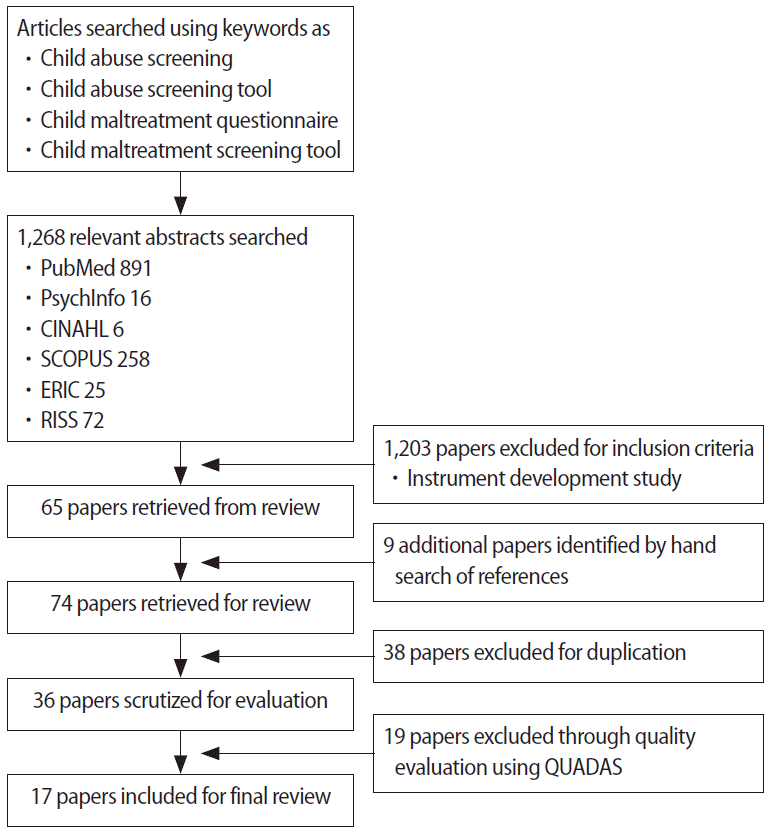
Table 1.
Quality Appraisal of the Studies
|
QUADAS |
Milner (1986) |
Lee (1992) |
Lee (1993) |
Jang (1999) |
Flowers (2000) |
Moon (2002) |
Bernstein (2003) |
Ondersma (2005) |
Han (2006) |
Lobbestael (2009) |
Runyan (2009) |
Zolotor (2009) |
DiLillo (2010) |
Anderst (2012) |
Louwers (2014) |
Park (2014) |
Sitting (2014) |
|
1 |
Patient representativeness |
No |
Yes |
No |
Yes |
No |
Yes |
Yes |
Yes |
Yes |
Yes |
Yes |
Yes |
Yes |
Yes |
Yes |
Yes |
Yes |
|
2 |
Selection criteria |
No |
Yes |
No |
Yes |
Yes |
Yes |
Yes |
Yes |
Yes |
Yes |
Yes |
No |
Yes |
Yes |
Yes |
Yes |
Yes |
|
3 |
Reference standard |
No |
No |
Yes |
No |
Yes |
No |
Yes |
Yes |
Yes |
Yes |
No |
No |
Yes |
No |
No |
Yes |
No |
|
4 |
Time period |
No |
No |
Yes |
No |
Yes |
Yes |
Yes |
Yes |
Yes |
Yes |
No |
No |
Yes |
Yes |
Yes |
No |
Yes |
|
5 |
Verification of reference standard |
No |
No |
Yes |
No |
Yes |
No |
Yes |
Yes |
Yes |
Yes |
No |
No |
Yes |
No |
No |
No |
No |
|
6 |
Same reference standard |
No |
No |
Yes |
No |
Yes |
No |
Yes |
Yes |
Yes |
Yes |
Yes |
Yes |
Yes |
No |
No |
No |
No |
|
7 |
Independence of index test |
No |
Yes |
Yes |
Yes |
Yes |
Yes |
Yes |
Yes |
Yes |
Yes |
Yes |
Yes |
Yes |
Yes |
Yes |
Yes |
Yes |
|
8 |
Description of reference standard |
No |
No |
No |
No |
Yes |
No |
Yes |
Yes |
Yes |
Yes |
No |
No |
Yes |
No |
No |
Yes |
No |
|
9 |
Description of index test |
Yes |
No |
Yes |
No |
Yes |
No |
Yes |
Yes |
Yes |
Yes |
No |
No |
No |
No |
No |
Yes |
No |
|
10 |
Index test result interpretation |
Yes |
No |
No |
No |
Yes |
No |
No |
Yes |
Yes |
Yes |
Yes |
Yes |
No |
No |
No |
No |
No |
|
11 |
Reference standard result interpretation |
No |
No |
No |
No |
Yes |
No |
No |
No |
Yes |
No |
Yes |
Yes |
No |
No |
No |
No |
No |
|
12 |
Clinical availability |
Yes |
No |
Yes |
Unclear |
Unclear |
Unclear |
No |
No |
Unclear |
No |
No |
No |
No |
yes |
yes |
Unclear |
yes |
|
13 |
Intermediate test result |
No |
No |
No |
No |
No |
No |
No |
No |
No |
No |
Yes |
Yes |
No |
No |
No |
No |
No |
|
14 |
Explanation of withdrawal |
No |
No |
No |
No |
Yes |
yes |
No |
No |
No |
No |
Yes |
Yes |
No |
yes |
yes |
No |
yes |
|
Total score |
3 |
3 |
7 |
3 |
11 |
5 |
9 |
10 |
11 |
10 |
8 |
7 |
8 |
6 |
6 |
5 |
6 |
Table 2.
Methodological Characteristics of the Studies
|
Author (Year) |
Nation |
Name of instrument |
Target population |
Instrument user |
Sample Size |
Setting |
Mean Age |
Gender distribution |
Inclusion criteria |
Exclusion criteria |
Study period |
Purpose |
|
Milner (1986) |
USA |
CAP |
Child abuser |
General person |
220 |
At risk parents |
26.8 (± 7.6) |
Unclear |
Unclear |
Unclear |
Unclear |
Assessment |
|
Lee (1992) |
Korea |
SSAEC |
Children in kindergarten |
General person |
140 |
3 kindergartens in primary schools |
Unclear |
Unclear |
Unclear |
Unclear |
Unclear |
Assessment |
|
Lee (1993) |
Korea |
SSAEC |
Children under 7 years of age |
Unclear |
301 |
Unclear |
Under 7 |
Unclear |
Unclear |
Unclear |
Unclear |
Assessment |
|
Jang (1999) |
Korea |
CAAS |
Children |
Person responsible for child abuse report |
746 |
11 child abuse counsel centers |
20-60 |
M/F=316/409 |
Health care provider, Counselor, Teacher, Lawyer, Social welfare worker |
Case intervention provider, Case reporter |
Unclear |
Assessment |
|
Flowers (2000) |
USA |
KID-SAVE |
Children of 7 to 15 years of age |
General person |
470 |
7 elementary schools |
10.69 (± 1.71) |
M/F=225/244 |
Capita in highest crime rate |
No signed consent form |
Unclear |
Assessment |
|
Moon (2002) |
Korea |
CAAS |
Children in primary school |
Children protector |
248 |
4 child protect institutions |
Unclear |
M/F=105/143 |
Unclear |
Unclear |
2002 |
Assessment |
|
Ondersma (2005) |
USA |
BCAP |
Child abuser |
General person |
1,470 |
At risk parents |
28.1 (± 10.5) |
M/F=1,063/407 |
Enrolled in child abuse treatment program |
Unclear |
Unclear |
Assessment |
|
Han (2006) |
Korea |
PAASC |
Children in primary and middle school |
Children protector |
366 |
Child protection institutions and general schools |
11.7 (± 1.40) 9-16 |
M/F=212/154 |
Institution |
Unclear |
2005 |
Assessment |
|
Lobbestael (2009) |
Netherlands and Belgium |
ITEC |
Parents |
General person |
362 |
Parents having traumatic experiences |
37.4 (± 10.84) 18-59 |
M/F=204/158 |
Psychiatric hospital and treatment center |
Unclear |
Unclear |
Assessment |
|
Runyan (2009) |
Columbia, Egypt, India, Lebanon, Malaysia, Russia, Congo |
ICAST-P |
Parents with children under 18 years of age |
Parents with children under 18 years of age |
697 |
2 rounds of Delphi procedure |
under 18 |
Unclear |
Unclear |
Unclear |
Unclear |
Assessment |
|
Zolotor (2009) |
UNICEF |
ISCAT-C |
Children 11 to 17 years of age |
Investigator |
571 |
2 rounds e-mail |
11-17 |
M/F=275/296 |
Low medium income |
No signed consent form |
2004 |
Assessment |
|
DiLillo (2010) |
USA |
CAMI |
Adults having traumatic experiences |
General person |
1,398 |
3 Universities |
203 (± 23) |
M/F=1,015/383 |
Undergraduate students |
Unclear |
Unclear |
Assessment |
|
Bernstein (2003) |
USA |
CTQ-SF |
Adults having traumatic experiences |
General person |
396 |
Drug detoxication center |
40.2 (± 8.8) |
Unclear |
Substance abusing parents |
Unclear |
Unclear |
Screening |
|
Anderst (2012) |
USA |
RASS |
Toddlers (5 < years of age) |
Clinical supervision |
139 |
Children who were seen in a hospital emergency department with unintentional injuries |
2.4 (± 1.2) |
Unclear |
Helping understand risk to toddlers (HURT) Study data collection |
Injury status was not available |
2008-2009 |
Screening |
|
Louwers (2014) |
Netherlands |
Escape instrument |
Children aged 18 years or younger |
Nurse |
38,136 |
3 Emergency departments |
5.5 |
M/F=21,737/16,399 |
Unclear |
Unclear |
2008-2009 |
Screening |
|
Park (2014) |
Korea |
FIND |
Children aged under 13 years |
NuBe Doctor EMT |
245 |
6 Emergency departments |
4 |
M/F=152/93 |
Unclear |
Unclear |
Unclear |
Screening |
|
Sitting (2014) |
Netherlands |
SPUTO VAMO-R |
Children aged 18 years or younger |
Nurse |
3,660 |
Emergency department |
Unclear |
Unclear |
Unclear |
Unclear |
2010 |
Screening |
Table 3.
Instrumental Characteristics of the Studies
|
Author (Year) |
Aim |
Items |
Scales |
Range |
Subcategories (items) |
Validity |
Reliability |
Sensitivity/ Specificity |
Standard error |
Confirmative factor analysis |
Cutoff |
Index test |
Reference test |
|
Milner (1986) |
Screening for child-abuser |
77 |
Agree/Disagree |
Unclear |
6 Factors |
Unclear |
Internal consistency α=.92 |
No/No |
No |
No |
No |
Child-abuser |
No |
|
Lee (1992) |
Identify child abuse |
22 |
1=everyday |
22-66 |
Hostile raising behavior (10) |
Crossing validity |
Internal consistency α=72 |
No/No |
No |
No |
No |
Child abuse |
No |
|
2=no |
Contrast validity |
|
3=sometimes |
Restricted raising behavior (8) |
Unclear |
|
Test-retest reliability α=79 |
|
Indolent raising behavior (4) |
|
Lee (1993) |
Identify abuse in early childhood |
22 |
3 Likert sclae |
Unclear |
Hostile raising behavior (10) |
Crossing validity |
Internal consistency α=.81 |
No/No |
No |
No |
No |
Child abuse |
ABCT (Adult Behavior toward Children Rating Scale) |
|
Restricted raising behavior (8) |
Contrast validity |
|
Indolent raising behavior (4) |
Convergent validity |
|
Unclear |
|
Jang (1999) |
Identify child abuse |
85 |
0=never |
0-425 |
Physical abuse outcome (16) |
Contrast validity |
Internal consistency α=.98 |
No/No |
No |
No |
No |
Child abuse group |
No |
|
5=complete abuse |
Sexual abuse outcome (6) |
Variance 93% |
|
Severe problem outcome (9) |
|
Affective problem outcome (38) |
|
Negligence outcome (16) |
|
Flowers (2000) |
Identify children’s exposure to community violence |
34 |
0=never |
0-68 |
Traumatic violence (12) |
Factor analysis |
Internal consistency α=.91 |
No/No |
No |
No |
No |
Childrens violence exposure |
TSC-C (Trauma symptoms checklist for children) |
|
1=sometimes |
Indirect violence (16) |
Construct validity |
Test-retest reliability α=.86 |
|
2=a lot |
Physical/Verbal abuse (6) |
Variance 32.9% |
|
Convergent validity |
|
Item total correlation r=.20-.54 |
|
Moon (2003) |
Identify child abuse |
62 |
0=never |
0-248 |
Primary care (9) |
Factor analysis |
Internal consistency α=.89-.98 |
No/No |
No |
No |
Yes |
Child abuse |
No |
|
1=rarely |
Physical abuse (12) |
Criterion related validity r=.25-72 |
|
2=sometimes |
Psychological |
|
3=often |
abuse (17) |
|
4=usually |
Sexual abuse (10) |
|
Verbal abuse (4) |
|
Etc(10) |
|
Ondersma (2005) |
Measure of parent child abuse |
24 |
Unclear |
Unclear |
Unclear |
Construct validity |
Internal consistency α=.89 |
93%/93% |
No |
Yes Normative |
No |
Child-abuser |
Child Abuse |
|
Variance 54.7% |
ROC=98% |
Fit Index=.97 |
Potential |
|
Inventory |
|
Han (2006) |
Identify child abuse in school |
37 |
1=no experience |
0-37 |
No subcategory |
Concurrent validity |
Internal consistency α=.97 |
No/No |
No |
Internal consisten-cy |
No |
Child abuse |
Child negligence scale |
|
2=experienced |
Construct validity |
|
Variance 49.9% |
|
Criterion related validity r=.75 |
|
Lobbestael (2009) |
Assess childhood traumatic events |
33 |
1=not at all, |
33-165 |
Sexual abuse (7) |
Item total correlation r=.35-.83 |
Internal consistency α=.84-.87 |
No/No |
No |
Yes Normative |
No |
Child abuse |
Childhood |
|
2=a little, |
Physical abuse (13) |
Fit Index=.95 |
Trauma |
|
3=considerably, |
Emotional abuse/neglect (13) |
Criterion related validity r=.46-.80 |
Questionnaire |
|
4=severly, |
Short Form |
|
5=very severely |
|
Milner (1986) |
Screening for child-abuser |
77 |
Agree/Disagree |
Unclear |
6 Factors |
Unclear |
Internal consistency α=.92 |
No/No |
No |
No |
No |
Child-abuser |
No |
|
Lee (1992) |
Identify child abuse |
22 |
1=everyday |
22-66 |
Hostile raising behavior (10) |
Crossing validity |
Internal consistency α=72 |
No/No |
No |
No |
No |
Child abuse |
No |
|
2=no |
Contrast validity |
|
3=sometimes |
Restricted raising behavior (8) |
Unclear |
|
Test-retest reliability α=79 |
|
Indolent raising behavior (4) |
|
Lee (1993) |
Identify abuse in early childhood |
22 |
3 Likert sclae |
Unclear |
Hostile raising behavior (10) |
Crossing validity |
Internal consistency α=.81 |
No/No |
No |
No |
No |
Child abuse |
ABCT (Adult Behavior toward Children Rating Scale) |
|
Restricted raising behavior (8) |
Contrast validity |
|
Indolent raising behavior (4) |
Convergent validity |
|
Unclear |
|
Jang (1999) |
Identify child abuse |
85 |
0=never |
0-425 |
Physical abuse outcome (16) |
Contrast validity |
Internal consistency α=.98 |
No/No |
No |
No |
No |
Child abuse group |
No |
|
5=complete abuse |
Sexual abuse outcome (6) |
Variance 93% |
|
Severe problem outcome (9) |
|
Affective problem outcome (38) |
|
Negligence outcome (16) |
|
Flowers (2000) |
Identify children’s exposure to community violence |
34 |
0=never |
0-68 |
Traumatic violence (12) |
Factor analysis |
Internal consistency α=.91 |
No/No |
No |
No |
No |
Childrens violence exposure |
TSC-C (Trauma symptoms checklist for children) |
|
1=sometimes |
Indirect violence (16) |
Construct validity |
Test-retest reliability α=.86 |
|
2=a lot |
Physical/Verbal abuse (6) |
Variance 32.9% |
|
Convergent validity |
|
Item total correlation r=.20-.54 |
|
Moon (2003) |
Identify child abuse |
62 |
0=never |
0-248 |
Primary care (9) |
Factor analysis |
Internal consistency α=.89-.98 |
No/No |
No |
No |
Yes |
Child abuse |
No |
|
1=rarely |
Physical abuse (12) |
Criterion related validity r=.25-72 |
|
2=sometimes |
Psychological |
|
3=often |
abuse (17) |
|
4=usually |
Sexual abuse (10) |
|
Verbal abuse (4) |
|
Etc(10) |
|
Ondersma (2005) |
Measure of parent child abuse |
24 |
Unclear |
Unclear |
Unclear |
Construct validity |
Internal consistency α=.89 |
93%/93% |
No |
Yes Normative |
No |
Child-abuser |
Child Abuse |
|
Variance 54.7% |
ROC=98% |
Fit Index=.97 |
Potential |
|
Inventory |
|
Han (2006) |
Identify child abuse in school |
37 |
1=no experience |
0-37 |
No subcategory |
Concurrent validity |
Internal consistency α=.97 |
No/No |
No |
Internal consisten-cy |
No |
Child abuse |
Child negligence scale |
|
2=experienced |
Construct validity |
|
Variance 49.9% |
|
Criterion related validity r=.75 |
|
Lobbestael (2009) |
Assess childhood traumatic events |
33 |
1=not at all, |
33-165 |
Sexual abuse (7) |
Item total correlation r=.35-.83 |
Internal consistency α=.84-.87 |
No/No |
No |
Yes Normative |
No |
Child abuse |
Childhood |
|
2=a little, |
Physical abuse (13) |
Fit Index=.95 |
Trauma |
|
3=considerably, |
Emotional abuse/neglect (13) |
Criterion related validity r=.46-.80 |
Questionnaire |
|
4=severly, |
Short Form |
|
5=very severely |
|
Runyan (2009) |
Identify child abuse |
46 |
Never and not in the past year=0 |
0-184 |
Practice (6) |
Item total correlation |
Internal consistency α=77-.88 |
No/No |
No |
No |
No |
Disciplinary practices used in the child’s life |
Parent-child |
|
1-2 times=1 |
Physical discipline (moderate) (12) |
Unclear Known group technique |
Conflict Tactics |
|
3-5 times=2 |
Severe physical |
p=.002-.007 |
Scale |
|
6-10 times=3 |
discipline (9) |
The Juvenile |
|
>10 times=4 |
Psychological discipline (12) |
Victimization |
|
Neglect(4) |
Questionnaire |
|
Sexual abuse (3) |
The WorldSAFE questionnaire |
|
Zolotor (2009) |
Child victimization survey |
ISCAT-C home (38) |
Unclear (Never, Sometimes, Many times) |
Unclear |
Home: exposure to violence (7) |
Factor analysis |
Internal consistency α=.68-.85 |
No/No |
No |
No |
No |
Prevalence of child victimization |
No |
|
Institution (44) |
Psychological victimization (7) |
Construct validity |
|
Neglect (6) |
Known group technique |
|
Physical punishment (10) |
p=.01-.07 |
|
Sexual abuse (6) |
|
Institution: Physical victimization (17) |
|
Psychological victimization (14) |
|
Sexual victimization (10) |
|
DiLillo (2010) |
Measure of child maltreatment history |
Unclear |
1=never happened, |
Unclear |
Sexual abuse Physical abuse |
Criterion related validity |
Internal consistency α=.88-.91 |
No/No |
No |
No |
No |
Past child abuse |
Childhood |
|
5=over ten times |
Psychological abuse |
r=.53-79 |
Test-retest reliability kappa=.54-.80 |
Trauma |
|
Exposure to interparental violence |
Questionnaire |
|
Bernstein (2003) |
Measure for maltreatment history |
28 |
1=never true, |
28-140 |
Emotional abuse (5) |
Known group technique Unclear |
Internal consistency α=.68-.85 |
No/No |
No |
Yes Fit Index over .90 |
No |
Past child abuse |
Childhood |
|
2=rarely true, |
Physical abuse (5) |
Trauma |
|
3=sometimes true, |
Sexual abuse (5) |
Questionnaire |
|
4=often true, |
Emotional neglect (5) |
|
5=very often true |
Physical neglect (5) |
|
Anderst (2012) |
Screening child abuse in the clinical setting |
9 |
No risk=0 |
0-36 |
No subcategory |
Item total correlation r=.63 |
Test-retest reliability kappa=.50-.83 |
No/No |
No |
No |
Yes |
Child abuse in the clinical setting |
Unintentional injuryv |
|
Minimal risk=1 |
Criterion related validity OR=2.8, 95% CI [1.5, 5.1] |
|
Possible risk=2 |
|
Moderate risk=3 |
|
High risk=4 |
|
Louwers (2014) |
Screening child abuse in ED |
6 |
0=no |
0-6 |
No subcategory |
Content validity OR=189.8, 95% CI [97.3, 370.4] |
Unclear |
80%/98% |
No |
No |
Yes ≥ 1 point |
Potential child abuse |
No |
|
1=yes |
|
Park (2014) |
Screening child abuse in ED |
12 |
1-9 Likert scale |
12-108 |
No subcategory |
Content validity |
Unclear |
No/No |
No |
No |
Yes ≥ 2 poin |
Potential child abuse |
No |
|
1-3=not accepted, |
|
4-6=not consented, |
|
7-9=accepted |
|
Sitting (2014) |
Screening child abuse in ED |
6 |
0=no |
0-6 |
No subcategory |
Content validity |
Unclear |
No/No |
No |
No |
Yes |
Potential child abuse |
No |
|
1=yes |
Table 4.
Stratified Outcomes of the Studies
|
Categories |
Usefulness |
Advantages |
Disadvantages |
Suggestions |
|
Milner (1986) |
Screening device for physical child-abuse |
Discriminant analysis indicated the Abuse scale correctly classified |
Dimensions were interpreted as distress, rigidity, unhappiness, problems |
Use of the Lie scale |
|
Lee (1992) |
Screening potential child abuse parents |
Development process including interview with child protector |
Ethical problem in process of interview |
Confirmative validation |
|
Lee (1993) |
Validation of child abuse scale in early childhood |
High correlation with adult abuse scale |
Validation study |
Construct validation |
|
Jang (1999) |
Criteria of child abuse case evaluation |
Identification of general and abused children Catch potential of child abuse |
Items not shown |
Study of factors affecting child abuse |
|
Flowers (2000) |
Useful in establishing a stressor event for the diagnostic post-traumatic stress disorder |
Empirical description about direct and indirect violence |
Living in highest crime neighborhood primarily African-American |
Generalized highest and lowest exposure sample |
|
Moon (2003) |
Screening the school aged child abuse |
Catch potential of child abuse |
Compare abused child with general child |
Test-retest reliability |
|
Ondersma (2005) |
Brief form of the child abuse potential inventory |
Cross-validated using an additional sample |
Need time-efficient screener for abuse risk |
Verify across diverse samples. |
|
Han (2006) |
Screening the school aged child abuse |
Korean child physical abuse instrument |
Compare abused child with general child |
Cut off point |
|
Lobbestael (2009) |
Assess extent of maltreatment |
Yield dimensional scores for severity of experiences of different childhood maltreatment |
Retrospective, semi-structured interview for childhood maltreatment |
Cross-cultural comparisons |
|
Runyan (2009) |
Available home and institution |
Multi-national multi-cultural multi-lingual parent use |
Inability to estimate true prevalence rate because of small sample size |
Include the risk of producing intense psychological stress |
|
Zolotor (2009) |
Available home and institution |
Multi-national multi-cultural multi-lingual child use |
Inability to estimate true prevalence rate because of small sample size |
Test-retest reliability |
|
DiLillo (2010) |
Web-based self-report measure of child maltreatment history |
Administered to a geographically diverse Nsample |
Items not shown Relatively uniform with respect to age, fairly high in socioeconomic status |
Cut off point |
|
Bernstein (2003) |
Screening measure for maltreatment histories |
Short form in both clinical and |
Lack of independence affected the external validity results |
Using a variety of research |
|
Anderst(2012) |
Screening child abuse in the clinical setting |
Clinical decision making tool for assessment of supervision of young children with unintentional childhood injury |
Inability to estimate true prevalence rate because of small sample size |
Future larger studies are needed to more completely assess RASS performance |
|
Louwers (2014) |
Identify potential child abuse in the Emergency department |
Identify potential child abuse in the Emergency department |
Fact that the rate of confirmed child abuse was unavailable |
ED nurses need training in how best to recognize, handle, and communicate potential child abuse. |
|
Park (2014) |
Identify potential child abuse in the Emergency department for any healthcare provider who lacks of medical knowledge |
Korean child physical abuse instrument |
Inability to estimate true prevalence rate because of small sample size |
Apply to any medical field |
|
Sitting (2014) |
Identify potential child abuse in the Emergency department |
Identify potential child abuse in the Emergency department |
Predictive value is not known |
Translate into another language |
Appendices
Appendix
References of Abuse Instruments
|
1. Lee SH. A study on behavior abusive parents. Sook-Myung Journal of Child Study. 1992;2:141-154. |
|
2. Lee SH. Validation of a scale for screening the abuse in early childhood. Korea Journal of Child Care and Education. 1993;2:69-77. |
|
3. Jang HY, Lee JY. The development of a child abuse assessment scale (1). Journal of Korean Council for Children & Rights. 1999;3(1):77-96. |
|
4. Flowers AL, Hastings TL, Kelley ML. Development of a screening instrument for exposure to violence in children: The KID-SAVE. Journal of Psychopathology & Behavioral Assessment. 2000;22(1):91-104. |
|
5. Moon SH, Jung YS. Development of the child abuse investment scale. The Social Welfare Research Review. 2003;12:43-76. |
|
6. Han IY, Park MS, Park HW, Yoo SK, Lee YW. Development of a physical abuse assessment scale for children. Journal of the Korean society of Child Welfare. 2006;21:7-27. |
|
7. Runyan DK, Dunne MP, Zolotor AJ, Madrid B, Jain D, Gerbaka B, et al., The development and piloting of the ISPCAN Child Abuse Screening Tool-Parent Version (ICAST-P): Child Abuse and Neglect 2009;33:826-832. http://dx.doi.org/10.1016/j.chiabu.2009.09.006. |
|
8. Zolotor AJ, Runyan DK, Dunne MP, Jain D, Peturs HR, Ramirez C et al. ISPCAN Child Abuse Screening Tool Children’s Version (ICAST-C): Instrument development and multi-national pilot testing. Child Abuse & Neglect. 2009;33:833–841. http://dx.doi.org/10.1016/j.chiabu.2009.09.004 |
|
9. Anderst J, Dowd MD, Schnitzer P, Tryon T. Preliminary development of a rapid assessment of supervision scale for young children. Pediatrics. 2012;129(6).2011-2880. http://dx.doi.org/10.1542/peds. |
|
10. Louwers EC, Korfage IJ, Affourtit MJ, Ruige M, Van D, Elzen AP, et al. Accuracy of a instrument to identify potential child abuse in departments. Child Abuse and Neglect. 2014;38:1275-1281. http://dx.doi.org/10.1016/j.chiabu.2013.11.005. |
|
11. Park JD, Gwak YH, Kim EJ, Kim JS, Ruw JM, Bae JK, et al. Development of child and elder abuse screening tool for healthcare provider to report. Department of Health and Human Services Policy Research. 2014:1-187. |
|
12. Sittig JS, Post ED, Russel IM, van Dijk IA, Nieuwenhuis. EE, van de Putte EM. Evaluation of suspected child abuse at the ED; implementation of American Academy of Pediatrics guidelines in the Netherlands. The American Journal of Emergency medicine. 2014;32:664-6. http://dx.doi.org/10.1016/j.ajem.2013.08.038 |
|
13. Milner JS, Gold RG, Wimberley RC. Prediction and explanation of child abuse: Cross-validation of the Child Abuse Potential Inventory. Journal of Consulting and Clinical Psychology.1986;54:865–866. |
|
14. Bernstein DP, Stein JA, Newcomb MD, Walker E, Pogge D, Ahluvalia T, et al. Development and validation of a brief screening version of the Childhood Trauma Questionnaire Child. Abuse & Neglect. 2003; 27(2):169–190. http://dx.doi.org/10.1016/S0145-2134(02)00541-0. |
|
15. DiLillo D, Hayes-Skelton SA, Fortier MA, Perry AR, Evans SE. Moore TLM, et al. Development and initial psychometric properties of the Computer Assisted Maltreatment Inventory (CAMI): A comprehensive self-report measure of child maltreatment history. Child Abuse and Neglect. 2010;34(5):305–317. http://dx.doi.org/10.1016/j.chiabu.2009.09.015. |
|
16. Lobbestael J, Arntz A, Harkema-Schouten P, Bernstein D. Development and psychometric evaluation of a new assessment method for childhood maltreatment experiences: The interview for traumatic events in childhood (ITEC). Child Abuse and Neglect. 2009;33(8):505-517. http://dx.doi.org/10.1016/j.chiabu.2009.03.002. |
|
17. Ondersma SJ, Chaffin MJ, Mullins SM, LeBreton JM. A brief form of the child abuse potential inventory: development and validation. Journal of Clinical Child and Adolescent Psychology. 2005;34(2):301-311. http://dx.doi.org/10.1207/s15374424jccp3402_9. |
|
|












 PDF Links
 PubReader
 ePub Link
 XML Download
 Full text via DOI
 Download Citation
  Print
Print